Pneumatic and hydraulic systems represent the central, strategic phase in the construction of a custom machine. They do not come at the beginning nor at the end: they sit at the heart of functional integration, once the mechanical structure is ready and needs to become operational.
Here is how they fit into the 4-point process scale:
| Phase 1 The process begins with the mechanical construction: frames, moving parts, guides, supports, and linkages. This stage defines the “shape” of the machine. | Phase 2 This stage delivers motion and power: pneumatic and hydraulic systems are the key to turning mechanical structures into controlled movement. |
| Phase 3 Following the installation of the pneumatic and hydraulic systems, the next step is electrical integration. This marks the birth of mechatronics—the perfect blend of mechanics, systems engineering, and automation. | Phase 4 Complete system testing: this stage determines if the machine is ready to go into production. |
1. Frommechanical assembly to on-board system installation
This is the phase where we build the load-bearing structure, define the moving parts, and install guides, supports, and kinematic mechanisms. For us, mechanical assembly is never an isolated operation: every alignment, every fastening point, and every technical routing is planned with the future integration of systems already in mind. This initial focus allows us to prepare a solid, functional foundation, ready to accommodate the pneumatic and hydraulic systems that will bring the machine to life.
2. The operational heart of on-machine systems
Pneumatic and hydraulic systems represent the stage where the machine transitions from a static structure to a dynamic system. Pneumatics enables fast, repetitive movements, while hydraulics ensures power, precision, and control even under high-pressure conditions. In this phase, we install:
- cylinders and actuators
- valves and regulators
- piping and fittings
- centraline oleodinamiche
- hydraulic power packs
Every circuit is custom-designed: this is a crucial step in building tailored machinery, as it defines the speed, power, smoothness, and safety of all movements.
3. Electrical integration: the birth of mechatronics
A machine only truly functions when all its parts work in perfect coordination. For this reason, after installing the pneumatic and hydraulic systems, we proceed with integrating them with the electrical system on-machine and with the control panel. This is where mechatronics comes into play—the fusion of:
- mechanics
- fluid power systems
- electrical systems
- automation and control
We connect sensors, actuators, and valves to the PLC logic, synchronizing every movement and ensuring harmonious operation. This multidisciplinary approach allows us to reduce critical issues, optimize commissioning times, and guarantee high, consistent performance.
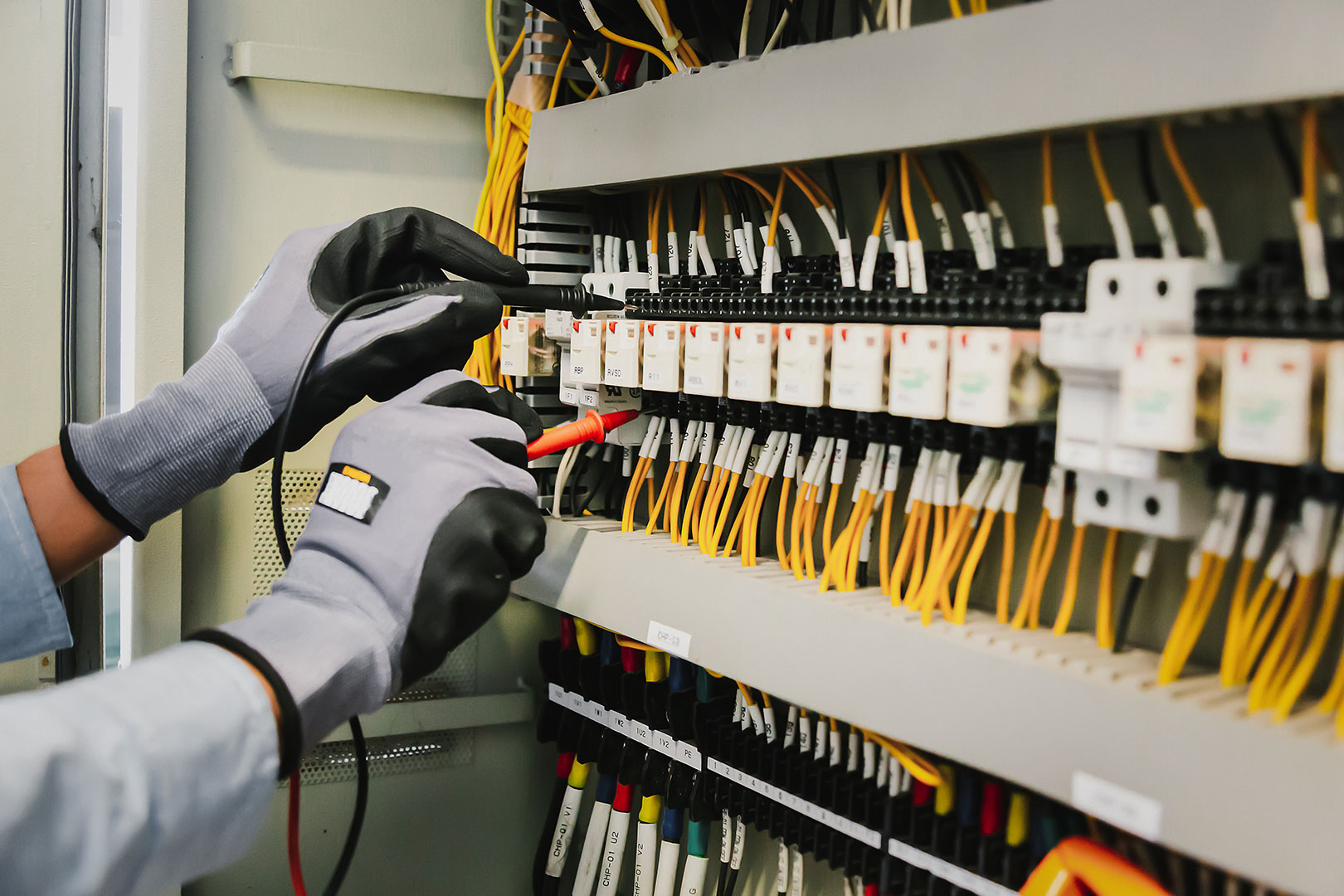
4. Comprehensive testing: the final verification that guarantees reliability
Once all systems are integrated, we proceed with testing. We do not just test individual systems: we verify the operation of the entire machine under real-world conditions, checking pressures, cycles, speeds, synchronisms, and operational safety. Testing is the phase where we confirm that every component—mechanical, pneumatic, hydraulic, and electrical—works in perfect harmony.
To discover how we can support you in developing hydraulic systems that enhance the productivity and efficiency of your business, contact L.A. Montaggi. We are ready to offer you the best solutions for your industrial project.